

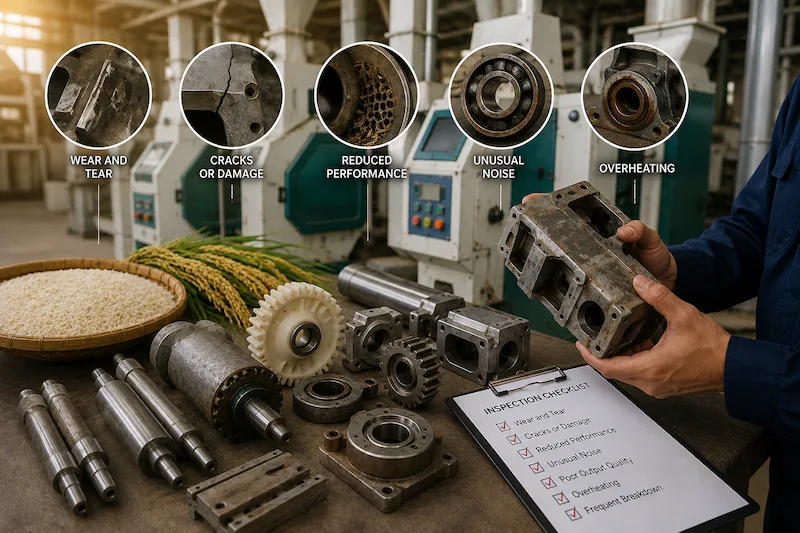
Early identification of damaged or worn components can prevent unexpected breakdowns and expensive production losses. Here is what your operators should be looking out for every shift.
Unusual Noise and Vibration
Unexpected noise or excessive vibration may indicate loose, damaged, or misaligned components. Operators should be trained to recognize the 'normal' hum of the mill.
Ignoring these symptoms can cause additional damage to connected machine parts, turning a minor replacement into a major overhaul involving shafts and motors.
"Navigating the complexities of industry standards requires a compassionate advocate who understands your unique situation."
— Spareon India
- Grinding or knocking sounds from the milling chamber
- Increased machine vibration felt on the chassis
- Loose fittings, missing bolts, or compromised mountings
Reduced Milling Performance
Worn rollers, screens, cylinders, and feeding components directly reduce production quality and efficiency. You will typically see this reflected in your daily yield reports.
A sudden spike in the percentage of broken rice is often the first quantitative indicator that internal components have exceeded their operational lifespan.
- Uneven rice whitening or polishing
- Reduced production capacity per hour
- Inconsistent grain quality and surface finish
- Higher broken rice percentage in the final sort
Visible Wear and Corrosion
Regular visual inspection helps detect cracks, deformation, corrosion, and surface wear before catastrophic failure occurs. Inspections should be done during scheduled cleaning stops.
Screens should be checked against light to spot expanding holes, and rubber components should be checked for brittleness.
- Cracks, fractures, or damaged edges on metal parts
- Rust and corrosion on frames or non-contact areas
- Surface deformation on abrasive rollers
- Excessive material loss on friction components
Conclusion
Proactive monitoring is vastly superior to reactive repairs. By empowering your floor staff to report these early warning signs, you can schedule maintenance during off-peak hours and maintain steady profitability.
Comments (2)
Matthew Larson
15 March, 2026In the realm of our industry, our proficiency transcends the mere understanding of basic practices; it delves into the nuanced artistry of technical expertise. We are architects of innovation, sculpting compelling narratives that resonate with clients and audiences.
Ben Ducket
16 March, 2026In the realm of our industry, our proficiency transcends the mere understanding of basic practices; it delves into the nuanced artistry of technical expertise. We are architects of innovation, sculpting compelling narratives that resonate with clients and audiences.